Toggle Navigation
open search bar
click to shop

GLP-1 Weight Loss and Hair Thinning: What You Need to Know

By Nutrafol Team2026-04-08

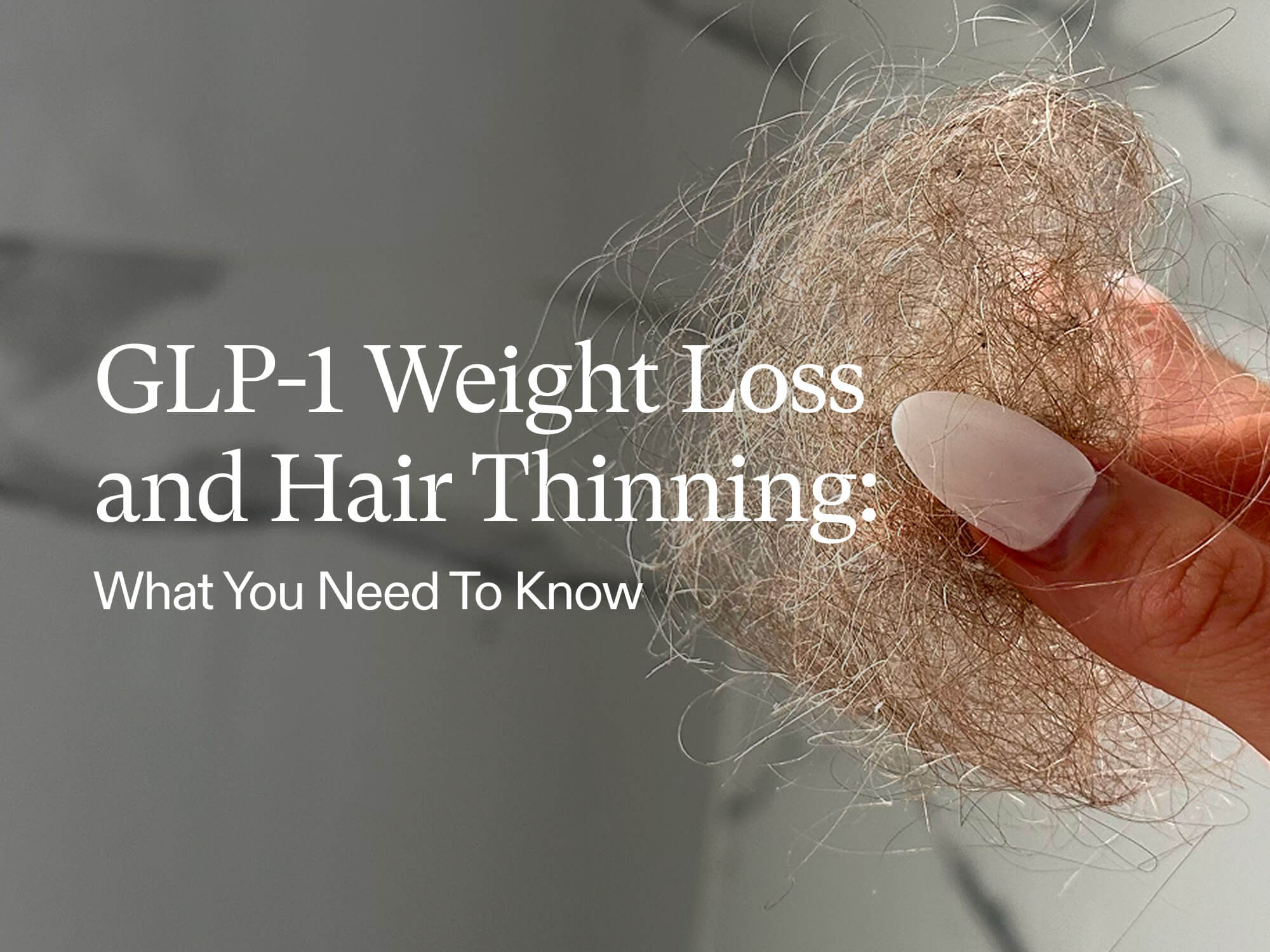
If you're on a GLP-1 medication and noticing changes in your hair, you're not imagining it—and you're not alone. Rapid or significant weight loss, a common effect of GLP-1 medications, can disrupt the hair growth cycle and contribute to increased shedding and hair thinning. The good news: there are proactive steps you can take to support your hair health throughout your weight-loss journey.

Here's what the current science says—and what you can do if you’re facing hair thinning on a GLP-1.

What Are GLP-1 Medications?

GLP-1 (glucagon-like peptide-1) is a hormone your body produces naturally. It is released from the cells lining your gut when you eat, helping regulate blood sugar by stimulating insulin production, suppressing the hormones that raise blood sugar, slowing digestion, and signaling fullness to the brain.1 

GLP-1 receptor agonists are a class of medications that mimic and amplify these effects.1 Originally developed to support blood sugar in type 2 diabetes, they've since become widely used for weight management, thanks to their ability to curb appetite, increase feelings of fullness, and support significant weight loss. Prescriptions for these medications surged by over 300% from 2018 to 2023.2 

Common GLP-1 receptor agonists include:

  • Semaglutide

  • Tirzepatide

  • Liraglutide

  • Dulaglutide

  • Exenatide

How Can Rapid Weight Loss Affect the Hair Growth Cycle?

Hair thinning has been reported among people using GLP-1 medications, particularly those experiencing rapid or significant weight loss. Studies have noted increased rates of hair thinning among users of semaglutide and tirzepatide compared to those on placebo.3,4 In fact, one study found that hair thinning was reported in almost 7% of people taking high-dose oral semaglutide, compared to less than 1% on placebo.5 Much of this evidence comes from observational data, so more research is needed to fully understand the reason why. 

GLP-1 weight loss can impact root causes of hair thinning:

Stress.

During times of rapid weight loss, the body can experience stress that causes it to deprioritize non-essential functions. Hair growth, while important, ranks lower than vital organ function, so resources can be diverted away from the hair, thus disrupting the hair growth cycle. This can result in increased shedding and noticeable hair thinning, typically appearing a few months after rapid weight loss begins and may be more pronounced in women and older adults.6

Nutrient gaps.

Hair follicles are among the most metabolically active structures in the body, depending on a steady supply of protein, vitamins, and minerals to support the hair growth cycle. Because GLP-1 medications reduce appetite significantly, some users may not be consuming enough of these key nutrients to support healthy hair growth while taking them. Nutrients closely associated with hair health include:

  • Protein: Provides the building blocks for keratin, which makes up hair. Adequate intake is essential for supporting the hair growth cycle. 

  • Iron: Plays a role in supporting hair follicle function.

  • Zinc: Supports hair tissue growth and repair.

  • B vitamins: Support keratin structure and overall follicle health.

  • Vitamin D: Associated with hair follicle cycling.

Which GLP-1 Medications Are Most Associated with Hair Thinning?

Not all GLP-1 medications carry the same level of association with hair thinning. Based on current data3 :

Medication:

Association with Hair Thinning

Semaglutide:

Higher — noted in both FDA reports and observational studies.

Tirzepatide:

Higher — similar pattern to semaglutide.

Liraglutide:

Lower — current data does not show the same association.

Dulaglutide:

Lower — current data does not show the same association.

Exenatide:

Lower — current data does not show the same association.

It's worth noting that semaglutide and tirzepatide tend to produce more significant weight loss than other GLP-1 medications, which may help explain why hair thinning is more commonly reported with these medications.7–9 The weight-loss mechanism, rather than a direct drug effect, may be the key driver.

How to Support Hair Health During GLP-1 Weight Loss.

Prioritize protein.

GLP-1 medications reduce appetite, which makes it easy to undereat protein, one of the most essential nutrients for the hair growth cycle. Even as caloric intake decreases, it's important to meet your daily protein needs. Your healthcare provider or a registered dietitian can help determine the right targets for your body and your pace of weight loss.

Monitor for nutrient gaps.

Rapid weight loss can create nutritional gaps that affect hair health over time. Focus on nutrient-dense foods and consider working with your healthcare team to check for any deficiencies through bloodwork, particularly iron, zinc, vitamin D, and B vitamins.

Support your hair from within.

GLP-1 weight loss doesn't have to mean hair thinning. Nutrafol Hair Growth Nutraceuticals are clinically tested to improve hair growth—and rigorous safety reviews support that they can be used with GLP-1 medications.*

GLP-1 weight loss can trigger key root causes of hair thinning, like nutrient gaps and stress on the body. Nutrafol Hair Growth Nutraceuticals are physician-formulated with standardized vitamins, minerals and natural ingredients to target key root causes of thinning such as stress, lifestyle triggers, and nutritional gaps for faster-growing, thicker, fuller, stronger hair, even during periods of significant weight change.

*Does not include Nutrafol Postpartum.

Get ahead of thinning before it starts.

You don't have to wait until you notice shedding to take action. Supporting your hair health proactively—at the start of your GLP-1 journey, or even before—helps set your hair growth cycle up for success as your body changes.

Keep your healthcare provider in the loop.

If you're on a GLP-1 medication and have concerns about your hair health, loop in your healthcare provider. They can help assess your overall nutritional status, monitor for contributing factors, and support a whole-body approach to your health—hair included.

Frequently Asked Questions About GLP-1 Weight Loss and Hair Health

Can weight loss from GLP-1 medications affect hair health? Rapid or significant weight loss—a common effect of GLP-1 medications—can contribute to increased shedding and hair thinning. The connection is thought to be related to the weight loss itself, rather than a direct effect of the medication. Supporting your nutritional status and hair health proactively may help.

Can I take Nutrafol while on a GLP-1 medication? Yes. Rigorous safety reviews support that Nutrafol Hair Growth Nutraceuticals can be used with GLP-1 medications.* Nutrafol Hair Growth Nutraceuticals are clinically tested to improve hair growth and can be a proactive part of your hair health support during weight loss. *Does not include Nutrafol Postpartum.

What nutrients are most important for hair health during weight loss? Protein, iron, zinc, vitamin D, and B vitamins are among the key nutrients that support the hair growth cycle. Rapid weight loss can create gaps in these nutrients, which is why nutritional support—through diet and targeted supplementation—is especially important when losing weight quickly.

Does hair thinning from GLP-1 weight loss affect everyone the same way? Not necessarily. Factors like rate of weight loss, nutritional intake, age, hormonal profile, and overall health can all influence how the hair growth cycle responds to significant weight changes. Some individuals may notice more shedding than others, and women and older adults may be more susceptible to hair thinning during periods of rapid weight loss.

Nutrafol and GLP-1 Medications

On a GLP-1 and noticing changes in your hair? Don't let weight loss slow your hair growth. Nutrafol Hair Growth Nutraceuticals are clinically tested to improve hair growth—and can be used with GLP-1 medications.* Take our quiz to find out which Hair Growth Nutraceutical may be right for you. 

*Does not include Nutrafol Postpartum.

If you have concerns, or medical condition(s), or are taking prescription medication(s), please speak to a healthcare provider before adding Nutrafol products to your routine. We do not recommend taking Nutrafol supplements if pregnant. Breastfeeding individuals should only consider our breastfeeding-friendly Postpartum formula.

Featured Products

1. Burke OM, et al. Dermatologic Implications of Glucagon-Like Peptide-1 Receptor Agonist Medications. Skin Appendage Disord. 2025;11:1–10. doi:10.1159/000544023

2. Dorell M. Rx History: The Rise of GLP-1s. Innovative Rx Strategies. Accessed 2024 Jan 25. https://innovativerxstrategies.com/rx-history-glp1s/

3. Burke OM, et al. Glucagon-like peptide-1 receptor agonist medications and hair loss: A retrospective cohort study. J Am Acad Dermatol. 2025;92(5):1141–1143. doi:10.1016/j.jaad.2025.01.046

4. Kim TH, et al. Adverse drug reaction patterns of GLP-1 receptor agonists approved for obesity treatment. Diabetes Obes Metab. 2025;27(6):3490–3502. doi:10.1111/dom.16376

5. Tran MM, et al. Dermatologic findings associated with semaglutide use: A scoping review. J Am Acad Dermatol. 2024;91(1):166–168. doi:10.1016/j.jaad.2024.03.021

6. Kang DH, et al. Telogen Effluvium Associated with Weight Loss: A Single Center Retrospective Study. Ann Dermatol. 2024;36(6):384–388. doi:10.5021/ad.24.043

7. Nunns M, et al. The quantity, quality and findings of network meta-analyses evaluating the effectiveness of GLP-1 RAs for weight loss: a scoping review. Health Technol Assess. 2025. National Institute for Health and Care Research. Available from: https://www.ncbi.nlm.nih.gov/books/NBK616834/

8. Lee N, Kim Y. Not All GLP-1 Receptor Agonists Are Alike: Real-World Evidence of Differential Endocrine and Dermatologic Safety. Diabetes Metab Res Rev. 2026;42:e70163. doi:10.1002/dmrr.70163

9. Kim TH, et al. Adverse drug reaction patterns of GLP-1 receptor agonists approved for obesity treatment: Disproportionality analysis from global pharmacovigilance database. Diabetes Obes Metab. 2025;27(6):3490-3502. doi:10.1111/dom.16376

These statements have not been evaluated by the Food and Drug Administration. This product is not intended to diagnose, treat, cure, or prevent any disease.

share with emailshare with Facebookshare with Twittershare with Pinterestshare with LinkedIn

Sign up for the Nutrafol Newsletter

© 2026 Nutraceutical Wellness Inc. All Rights Reserved.

These statements have not been evaluated by the Food and Drug Administration. This product is not intended to diagnose, treat, cure or prevent any disease.