


Hormonal transitions—postpartum, perimenopause, and menopause—directly affect how hair grows and sheds.
During pregnancy, elevated estrogen extends the hair’s growing phase. After birth, a sharp drop in estrogen triggers synchronized shedding, typically appearing 2 to 3 months postpartum.
In perimenopause, the hormonal balance between estrogen, progesterone, and testosterone becomes less predictable, shortening the growing phase and increasing shedding.
Perimenopause can begin 7 to 10 years before menopause, meaning changes in hair, sleep, and mood may start in the late 30s or early 40s.
Understanding why these changes happen can significantly reduce the stress of experiencing them.
Nutrafol researches hair thinning in specific female populations—including postpartum and menopausal women—to develop formulas relevant to each stage.
Why Your Hair Changes During Hormonal Transitions, According to Dr. Isabelle Raymond
Health & Wellness
5 Min Read

Get hair, health, and science news delivered right to your inbox.
Key Takeaways
If your hair has changed during a major hormonal transition, you’re not imagining it. Postpartum, perimenopause, menopause—each of these shifts affects how the body functions, including how hair grows and sheds. Dr. Isabelle Raymond, Senior Vice President of Global Medical & Clinical Affairs at Nutrafol, joined Radio Headspace to explain what’s actually happening inside the body during these transitions, and why understanding the biology can make the experience feel considerably less overwhelming.
This episode is part of Nutrafol’s Stress Awareness Month collaboration with Headspace, built around the belief that hair health starts from within.
How the Hair Growth Cycle Works
Understanding why hormones affect hair starts with understanding how hair actually grows. Dr. Raymond walks through the full cycle in the episode:
Catagen phase (transition): A brief resting stage that lasts a few weeks, during which the hair follicle detaches from the bulb and growth pauses.2
Telogen phase (shedding): Hair sheds over a period of 2 to 3 months before a new growth cycle begins.2
Shedding 50 to 100 hairs a day is normal.3 The concern arises when large numbers of follicles move into the shedding phase at the same time—which is exactly what happens during significant hormonal shifts.
What Happens After Giving Birth
Pregnancy keeps estrogen levels elevated, which extends the anagen phase.2 More hair stays where it is for a longer period. This is what gives many people that fuller, thicker hair during pregnancy.
After birth, estrogen drops sharply.4,5 Follicles that had been held in the growing phase are suddenly released into the shedding phase all at once.5 Because the shedding phase takes 2 to 3 months to complete, the visual result often doesn’t appear until weeks after delivery.
“It’s all happening at once,” Dr. Raymond explains. That gradual shed you didn’t have during pregnancy arrives all at the same time. For women with longer hair, seeing that volume in the shower can feel alarming. Understanding it as a predictable biological response—not a sign that something is wrong—can reduce the stress of experiencing it.
What’s Happening During Perimenopause and Menopause
Perimenopause can begin 7 to 10 years before menopause, meaning women in their late 30s or early 40s may already be experiencing early effects: disrupted sleep, mood shifts, brain fog, and changes in hair.6,7
During this transition, the rhythm between estrogen, progesterone, and testosterone becomes less predictable. Hormone levels fluctuate more dramatically, sometimes spiking, sometimes dropping sharply.7 Dr. Raymond describes moving from a coordinated monthly flow into something more chaotic—a disharmony between these hormones that affects nearly every organ in the body, including the brain.
As estrogen and progesterone decline, their protective effect on the hair growth cycle diminishes.7 The anagen phase shortens, meaning hair spends less time growing and more time moving toward shedding.7 The result, over time, is thinning that many women don’t connect to their hormones because no one prepared them for it.
“Every organ is affected,” Dr. Raymond says. “And knowing that—knowing that every organ is on a roller coaster—will give you a lot more understanding and patience and grace to understand that you are going through something.”
Why Information Matters for Your Wellbeing
One of the most important threads in this conversation is how much the unknown amplifies distress. When women don’t know that postpartum shedding is expected, or that perimenopause can trigger hair changes starting in their late 30s, the experience feels like something is wrong. That triggers more stress, which can contribute further to hair thinning.
Dr. Raymond’s message is that knowing the reason interrupts that cycle. “If I know this is supposed to happen, then I can say: I’m just going through it right now.” She also speaks candidly about her own perimenopause experience—noting that even as a scientist and clinician, she didn’t have this information until she was living through it.
Why Nutrafol Studies Women by Life Stage
Nutrafol’s clinical research program, led by Dr. Raymond, is built on a clear premise: hair thinning in women is not a one-size-fits-all experience. Key root causes shift across life stages, which is why Nutrafol studies specific female populations separately—postpartum and menopausal women among them—and develops formulas designed to address distinct needs of each stage.
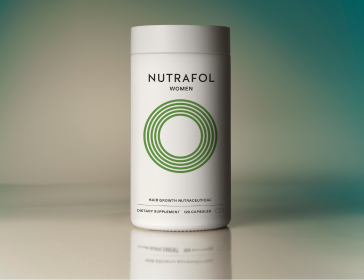
Nutrafol Women’s Balance is formulated to provide additional support for healthy hormone balance as a key root cause of hair thinning in women over 45.
“It matters to be studied and seen,” Dr. Raymond says. Seeing results from research conducted on women in your specific life stage gives you confidence that what you’re taking is designed for you.
One Step to Take Right Now
If you’re in the middle of a hormonal transition, Dr. Raymond’s advice is to start by finding your people. Community, access to reliable information, and being able to talk openly about what you’re experiencing are all meaningful ways to reduce the load.
“When you have power and agency over what’s happening to you, it just makes everything better,” she says. Being able to speak about it openly—even laugh about it—turns out to be one of the most calming things you can do.
Listen to the Full Episode
Dr. Isabelle Raymond’s conversation with Radio Headspace goes deeper on all of this—including her personal experience navigating perimenopause, the clinical research that guides Nutrafol’s formulas for women, and why she believes understanding your body is one of the most empowering things a woman can do.
Frequently Asked Questions
Does perimenopause cause hair thinning?
Yes. As estrogen and progesterone decline during perimenopause, the anagen (growing) phase of the hair growth cycle shortens, and more follicles shift toward shedding.7 This is a normal, expected change tied to hormonal shifts—not a sign that something is permanently wrong.
Why does hair shed so much after having a baby?
During pregnancy, elevated estrogen keeps hair follicles in the growing phase longer. After birth, estrogen drops sharply, releasing those follicles into the shedding phase all at once. The shedding typically appears 2 to 3 months after delivery.5,7
When does perimenopause start?
The average age of menopause is 51, but perimenopause can begin 7 to 10 years before—meaning some women begin experiencing hormonal changes in their late 30s or early 40s.6,7
Why does Nutrafol study hair thinning in women separately?
Women’s hormonal biology is distinct, and key root causes of hair thinning shift across life stages. Nutrafol researches specific female populations to develop formulas with clinical substantiation for each stage, including postpartum and menopausal transitions.
What can support hair health during hormonal transitions?
A whole-body approach that addresses hormonal balance, stress, and nutrition supports healthy hair growth during these transitions. Nutrafol’s life-stage-specific Hair Growth Nutraceuticals are clinically studied for women at different hormonal stages.


References
1. Chang LY, et al. Evolution of long scalp hair in humans. Br J Dermatol. 2025;192(4):574-584. doi:10.1093/bjd/ljae456
2. Grymowicz M, et al. Hormonal effects on hair follicles. Int J Mol Sci. 2020;21(15):5342. doi:10.3390/ijms21155342
3. Murphy MB, Agarwal S, Zito PM. Anatomy, Hair. In: StatPearls. StatPearls Publishing; updated August 8, 2022. Accessed August 3, 2026. https://www.ncbi.nlm.nih.gov/books/NBK513312/
4. Wu X, Jin R. Effects of postpartum hormonal changes on the immune system and their role in recovery. Acta Biochim Pol. 2025;72:14241. doi:10.3389/abp.2025.14241
5. Hirose A, et al. Investigation of exacerbating factors for postpartum hair loss: A questionnaire-based cross-sectional study. Int J Womens Dermatol. 2023;9(2):e084. doi:10.1097/JW9.0000000000000084
6. Wegrzynowicz AK, et al. Insights into perimenopause: A survey of perceptions, opinions on treatment, and potential approaches. Women (Basel). 2025;5(1):4. doi:10.3390/women5010004
7. Gupta AK, et al. Menopause and hair loss in women: Exploring the hormonal transition. Maturitas. 2025;198:108378. doi:10.1016/j.maturitas.2025.108378


